The Single-Jar Doctrine: One House Rub, Three Meats, Zero Shelf Clutter

Photo: homemade barbecue spice rub in glass jar beside smoked chicken thighs on cutting board, via i.pinimg.com
Open your spice cabinet. Count the shakers you bought because the label had a cartoon pig on it. Now count the ones you reached for this month. That gap is the rookie tax, and most backyard cooks pay it every summer.
I spent a decade buying rubs before I admitted the obvious: I wasn't collecting flavor, I was collecting indecision. So I built one blend, wrote the ratio on masking tape, and stuck it to the lid. Two years later, it's the only jar that runs empty.
Why the shelf quietly works against you
Commercial rubs aren't bad. Plenty are genuinely good. The problem is structural: every jar locks in a fixed salt-to-sugar-to-spice ratio, and that ratio was designed for one cut cooked one way. Use a sweet Kansas City blend on a chuck roast at 275°F and the sugar goes from mahogany to bitter somewhere around hour four. Use a salt-forward beef rub on chicken thighs and you're eating a salt lick with a smoke ring.
Then there's freshness. Ground spices fade fast—paprika and garlic powder are shadows of themselves after about six months—and a shaker bought for one Labor Day cook sits in the dark for three years. Cost is the last straw. Good commercial rubs run $9 to $14 for 12 ounces. A homemade batch of the same volume costs about four bucks, and you know exactly what's in it.
The base ratio: 4 - 4 - 2 - 1 - 1
This is the whole trick. It fits on a sticky note, scales up or down, and holds its balance across poultry, pork, and beef.
By weight: 4 parts kosher salt, 4 parts coarse black pepper, 2 parts sweet paprika, 1 part garlic powder, 1 part onion powder, and a scant third of a part cayenne.
A starter batch, in grams:
- 60 g kosher salt (Diamond Crystal; if you use Morton, drop to 50 g—it's denser)
- 60 g coarse black pepper, 16 mesh
- 30 g sweet paprika
- 15 g garlic powder
- 15 g onion powder
- 5 g cayenne
That yields roughly 185 g, or about a cup and a half. Mix it in a bowl, whisk it, and jar it.
Two notes that matter more than they sound. Weigh everything. Volume scoops of paprika versus pepper are wildly inconsistent, and inconsistent rubs are how people end up blaming their smoker. And use coarse pepper. The fine stuff turns to dust and vanishes into the meat instead of building that peppery bark you're after.
For big cuts, dry brine separately with plain salt overnight, then cut the salt in this blend to 2 parts so you don't double up. You'll thank me on the chuck roast.
Dial one: sugar, and when to skip it
Sugar is a bark tool, not a flavor requirement. It buys you color, gloss, and a chewier crust—but only in a narrow window.
Add 10 to 15 percent brown sugar by weight—about 20 to 25 g per starter batch—when you're cooking poultry or pork between 225°F and 275°F. Chicken thighs, whole birds, pork butts, and ribs all benefit. The sugar melts, grabs smoke, and gives you that lacquered look people photograph before they eat.
Skip it entirely on beef, and skip it any time your pit is running above 300°F. Sugar doesn't brown up there, it carbonizes, and carbonized sugar is the leading cause of the black-crust panic I see in every backyard forum thread. If you want sweetness on a hot-and-fast cook, glaze at the end instead.
Dial two: heat, and how far to push it
Five grams of cayenne in a 185 g batch is roughly 3 percent—enough to register as warmth on the finish and nothing more. That's the right default for a crowd.
Push to 6 to 8 percent (11 to 15 g) for wings, drumsticks, or anything headed for a buffalo sauce. For depth rather than sharpness, swap half the cayenne for ancho or chipotle powder; you'll get a rounder, smokier burn that plays nicer with hickory and pecan.
The test: three shakers, one Saturday
I ran the house blend against three commercial rubs I'd happily buy again for the right job: a big-box sweet-and-salty poultry blend, a famous Kansas City-style rub heavy on brown sugar and paprika, and a heat-forward chipotle-lime shaker. Three meats, one afternoon, no wrap on anything until the bark set.
Chicken thighs. Two-zone setup, 325°F, indirect until 175°F internal, about 45 minutes. The house blend produced bite-through skin with a clean salt level. The sweet poultry blend went candy-sweet and left a sticky film on the grate. The chipotle-lime overwhelmed the meat completely—fine on wings, wrong on thighs.
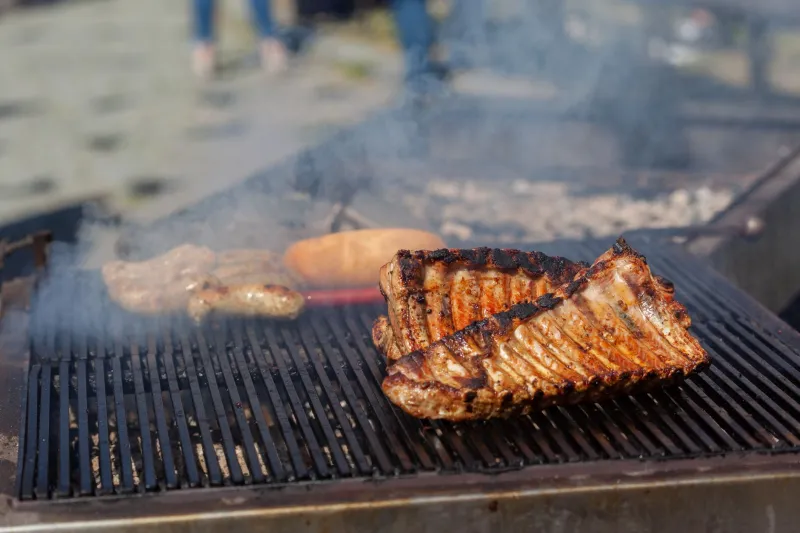
Pork ribs. 250°F, unwrapped for the first three hours. The Kansas City rub genuinely beat the plain house blend on color and gloss; that sugar load is doing real work. But when I mixed a second rack with the sugar dial turned to 12 percent, the difference mostly evaporated. Two racks, indistinguishable to four neighbors, and one of them cost a third as much.
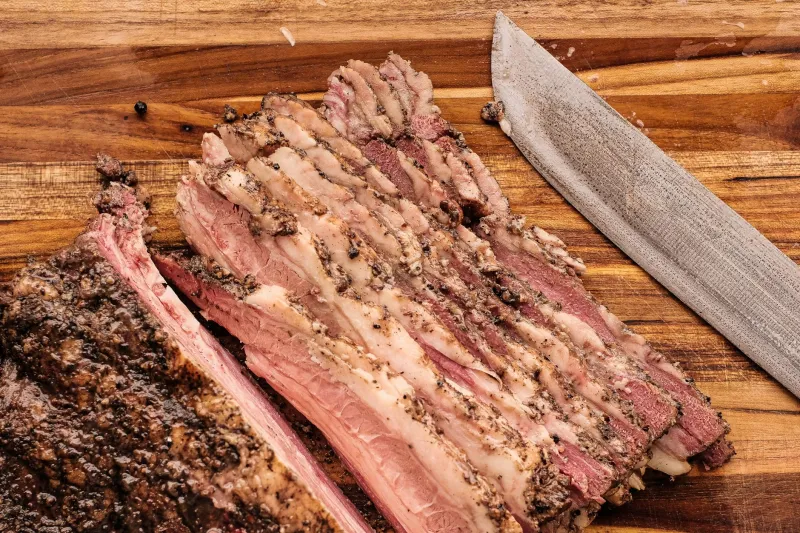
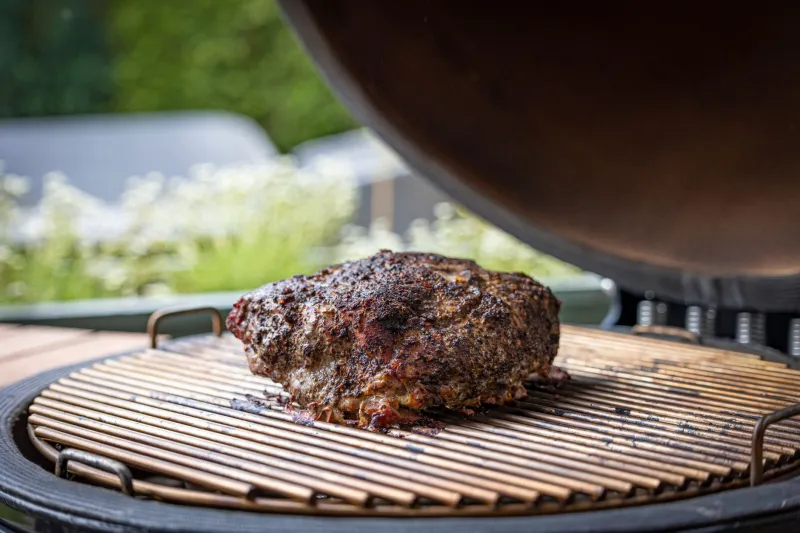
Chuck roast. A 2.5-pounder at 275°F until it probed tender around 203°F. House blend won going away. Both sweet commercial rubs turned dark and slightly acrid on the exterior by the stall, and the beef rub would have needed a salt cut anyway. The chuck came out peppery, beefy, and clean.
Score it honestly: house blend won two, tied one on price. That's not a marketing claim, that's just what a blend tuned to the cook does that a jar tuned to a label can't.
Keeping the jar honest
Make small batches—double the starter recipe, no more—and write the date on the lid. Ground spices fade in about six months, so a fresh jar twice a year beats a giant one that goes stale. Store it cool and dark, and never dip a wet or meaty spoon into it. A wide-mouth pint jar with a screw lid is all you need.
As for the orphan shakers already on the shelf, don't throw them out. They're excellent finishing dusts, popcorn seasonings, and dry-brine shortcuts for weeknight chicken. Just stop expecting them to run the whole cook.
One jar, two dials, three meats, and a Saturday that stays low and slow. That's the whole doctrine.