Rubbery Skin, Bland Meat, No Smoke Ring: Fixing the Three Sins of Backyard Chicken
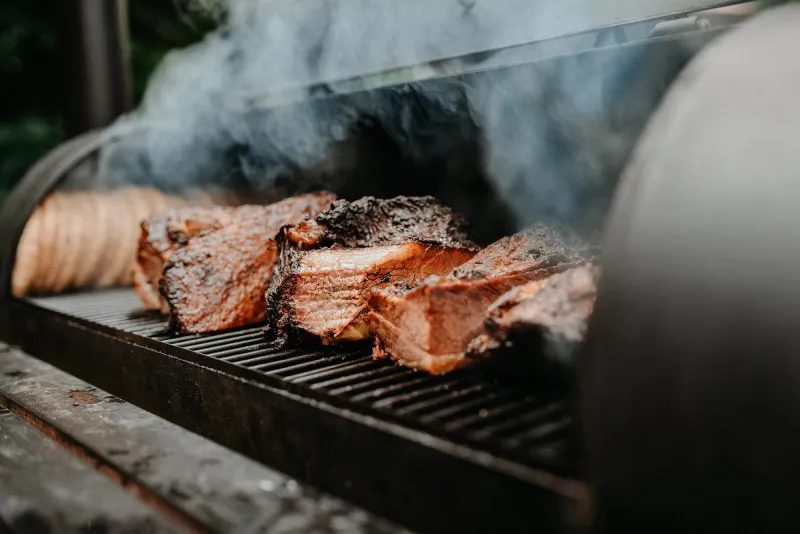
Photo: smoked whole chicken on barbecue smoker grates crispy golden skin, via recipes.net
Let's be honest with ourselves for a minute. Most of us can hold 225°F for twelve hours and turn out a respectable brisket, but hand us a whole chicken and suddenly we're producing something that tastes like it was smoked across the street from the actual smoker. Rubbery skin, meat that seasons exactly as deep as the surface, and a pit full of confusion about why there's no smoke ring.
Chicken doesn't get the respect it deserves. It's cheap, it's fast, and it will punish you for every shortcut. So we spent three weekends and about fifteen birds figuring out where backyard chicken goes wrong — and what the competition crowd does differently.
Sin Number One: Skin That Fights Back
The rubbery skin problem comes down to one word: fat. Chicken skin is loaded with it, and fat renders slowly. At typical low-and-slow temps — 225 to 250°F — the skin just sits there, flabby and pale, doing its best impression of a raincoat.
Competition cooks solve this by finishing hot. Once the breast hits around 155°F internal, crank the smoker (or move the bird to a hot grill) and let the skin get to 450°F-plus territory briefly. The fat renders, the skin crisps, and you keep the smoke flavor you already built.
A few more tricks we tested:
- Dry the skin overnight. Uncovered in the fridge, salt-shaker style. Dry skin crisps; wet skin steams.
- Butter or oil under the skin. A thin layer helps conduct heat to the skin itself instead of just the meat below it.
- Skip the spritz on the skin. We love spritzing brisket, but every mist resets your skin's progress toward crispy.
Sin Number Two: Seasoning That Stops at the Surface
Rub doesn't penetrate. That's not a secret — salt is the only part of your rub that travels deep into meat, and even it needs help. On a thick brisket, surface seasoning works because there's so much meat underneath. On a chicken, the margin of error is thin.
This is where the brine-vs.-spatchcock debate gets interesting, because they're actually solving different problems.
The brine camp is chasing moisture and salt distribution. We ran a simple 5% salt brine — 50 grams of salt per liter of water — with a spoonful of sugar, for four hours on one bird and overnight on another. The overnight bird was noticeably juicier at the breast, even after a slightly sloppy rest. If you've got the fridge space, brine. If you don't, even a two-hour brine beats nothing.
The spatchcock camp is chasing geometry. Cutting out the backbone and flattening the bird means the thighs and breasts finish at nearly the same time instead of the breasts overcooking while you wait on the legs. We tested a spatchcocked bird against a whole one on the same smoker at the same time. The spatchcock finished almost 40 minutes faster and the breast was a full 10 degrees less overcooked at pull time. For a weekend cook where you're also babysitting sides, spatchcocking is the single highest-leverage move in backyard chicken.
Do both if you're feeling ambitious. We did. It won.
Sin Number Three: The Smoke Ring That Was Never Coming
Here's the part nobody wants to hear at the cookout when someone points at the sliced breast and asks why there's no pink: poultry doesn't really do smoke rings the way brisket does.
The smoke ring is a chemical reaction between nitrogen dioxide in the smoke and myoglobin in the meat. Chicken breast is low in myoglobin to begin with, and the chemistry just doesn't produce the same dramatic ring. What people mistake for a smoke ring on chicken is often just... slightly undercooked meat near the bone, which is a different problem entirely.
So stop chasing it. Chase flavor and texture instead. Smoke is still absolutely present in the final product — fruit woods like apple and cherry read beautifully on poultry, and a little pecan adds backbone without turning the bird bitter. If your chicken tastes smoky and juicy, nobody at the table is measuring a ring.
The Rub That Earned Its Spot
After a few rounds of tweaking, here's the house rub that came out of our testing. It's balanced for poultry — a little sweet, a little savory, not so salty that it fights the brine (if you brined, cut the salt in half):
- 2 tbsp kosher salt (1 tbsp if brined)
- 2 tbsp turbinado sugar
- 1 tbsp paprika
- 2 tsp granulated garlic
- 2 tsp granulated onion
- 1 tsp black pepper
- 1 tsp dried thyme
- 1/2 tsp cayenne
Apply it the night before if you skipped the brine, or right before the smoker if you brined. Either way, get it under the skin on the breasts and thighs. That's where flavor has to live.
The Weekend Game Plan
Put it all together and here's your Saturday:
- Friday night: spatchcock the bird, dry-brine or wet-brine, and let it sit uncovered in the fridge.
- Saturday: smoker at 250°F, apple or cherry wood, bird on skin-side up.
- Pull the breast at 157°F (carryover takes it to 165) and the thighs at 175–180°F for proper texture.
- Crank the heat or hit a hot grill for 3–5 minutes a side to crisp the skin.
- Rest 15 minutes. Yes, chicken rests too.
None of this requires a $2,000 cooker. Every trick here works on a cheap offset, a kettle with a snake, or a pellet smoker that runs a little hot. Chicken is the cheapest meat in the case and the fastest way to level up as a pitmaster. Give it the same attention you give your brisket, and it'll stop being the disappointing supporting act at your own cookout.